浮出水面
科学家开发新技术 可以大规模生产生物降解微型机器人_我的网站

一 |
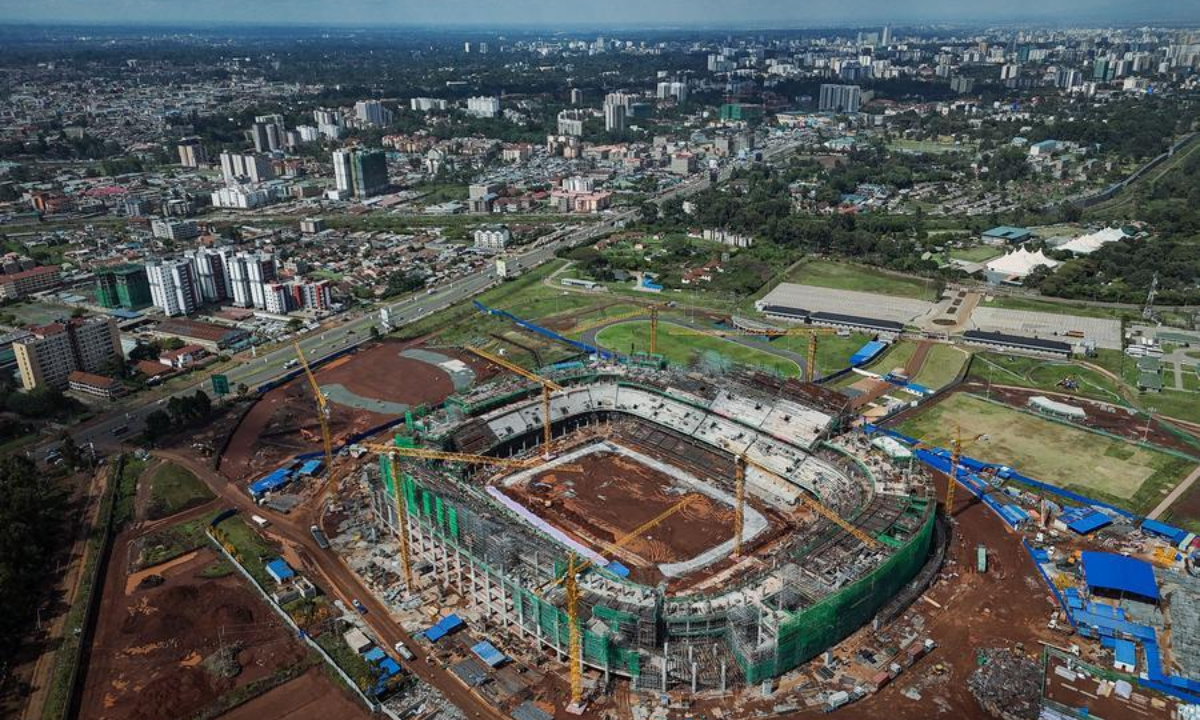
"The schedule was extremely tight -- just two years, while comparable projects elsewhere usually take more than three," Du Xiao, project manager of the stadium for China Road and Bridge Corporation (CRBC), told Xinhua in a recent interview. "There is a very real sense of pride."
According to Du, the stadium has no running track, bringing spectators close to the pitch. Its seats take on the green, red and black of Kenya's national flag, while the facade features the traditional shield and spear of the Maasai people.
Upon completion, the stadium is set to be renamed the Raila Odinga International Stadium, in honor of Kenya's late former Prime Minister Raila Odinga.
The roof adopts a cable-supported grid system erected with a "cable-first, steel-after" method, which Du said is the first of its kind independently designed and built by China. Without temporary steel supports, 48 radial cables are tensioned to lift six ring cables before steel trusses are laid on top, saving at least three months of construction time, with displacement controlled to the millimeter. In 2025 alone, some 1,300 containers of materials and equipment were shipped from China to the site.
For CRBC, the stadium is only the latest chapter of a much longer story. The company built its first road in Kenya in 1984, and over 42 years, its footprint has extended from roads to bridges, ports, railways and buildings.
Du Shan, the executive general manager of CRBC Kenya office, recalled that before 2008, Nairobi was cut apart by three rivers and a cross-district trip could take more than three hours. After CRBC completed the ring roads, the journey now takes about 50 minutes. The company is also expanding the A8, a national trunk road, from two lanes to four and six, she said.
On the Mombasa-Nairobi Standard Gauge Railway, wildlife corridors were built with a clearance of more than six meters, "so that giraffes can pass with their heads held high," Du Shan said.
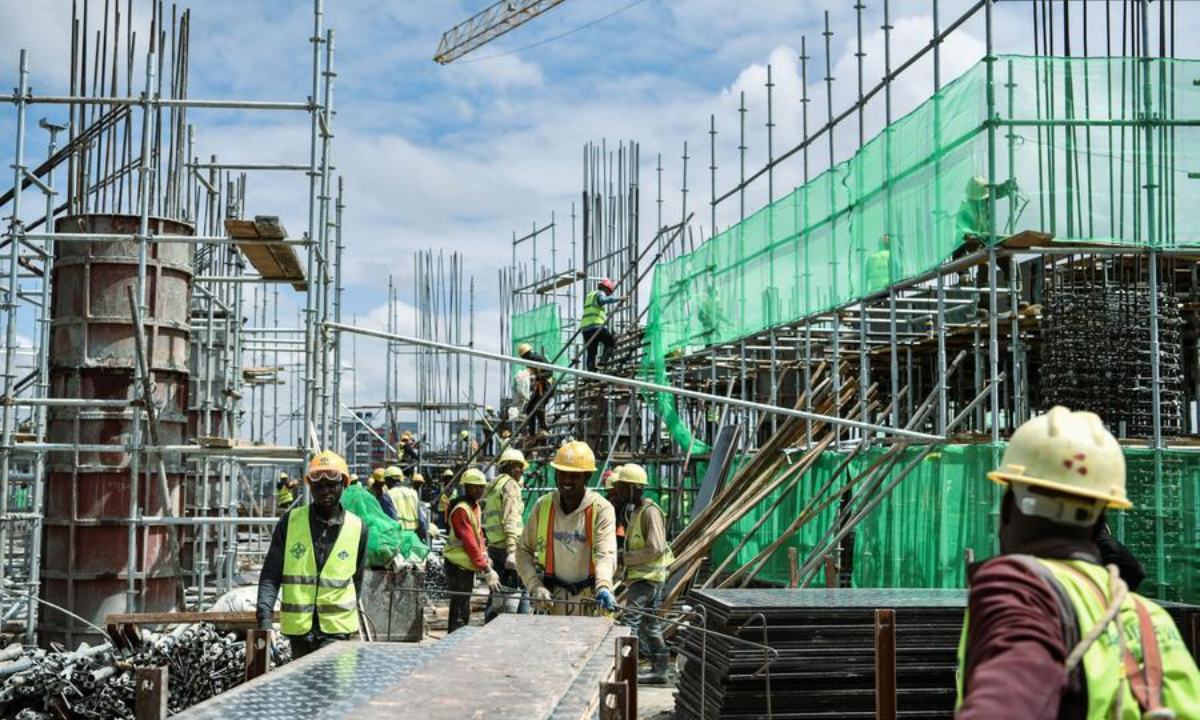
"Working overseas, we should not arrive thinking about changing the place. We should first adapt to and learn from the local community," he said. "What many projects truly open up is not just roads and railways, but trust between people."
The stadium sits near Kibera, Kenya's largest informal settlement. Du Xiao remembers a local young man named Sammy, who had no skills when he applied for a job but volunteered for the project's equipment training and became a pump truck operator. "I asked him why he worked so hard. He said, 'I never thought I would have the chance to touch these machines. Now I feel I can support my whole family.'"
According to Du Shan, the project recruited nearly 500 young workers from the neighborhood during construction, many of whom have qualified as assistant engineers, while about 280 local youths were mentored into technical backbones during the construction of the Mombasa-Nairobi railway.
More than 350 CRBC employees have worked overseas for over a decade, and each year the company awards them a gold medal for long-term dedication, she said. "The medal is not only an honor, but also a kind of warmth. Because 42 years -- it has truly not been easy."
When his child was born, Du Xiao was at a critical stage of the Nairobi Expressway project and could not make it home. "People in overseas engineering live in two worlds -- the project site on one side, the family on the other. All you can do is try to do a little better on each side," he said.
"Maybe I will one day leave this country. But this stadium will remain," he said. "I came here to build projects. Then I found that this country has shaped who I am today."
。 为了创造一种每分钟可以生产100多个可在体内分解的微机器人技术,大邱庆北科技学院(DGIST)机器人和机电工程系的Hongsoo Choi教授团队与韩国天主教大学首尔圣玛丽医院的Sung-Won Kim教授团队以及苏黎世联邦理工学院的Bradley J. Nelson教授团队合作。
以微创靶向精准治疗为目标,构建微型机器人的方法有很多。其中最受欢迎的是被称为双光子聚合法的超精细3D打印工艺,它通过两个激光器相交引发合成树脂的聚合。

二 | 这种技术有能力创建具有纳米级精度的结构。缺点是创建一个微型机器人需要大量的时间,因为体素,即通过3D打印实现的像素,必须连续固化。此外,在双光子聚合过程中,机器人中的磁性纳米粒子可能会阻碍光路。当利用高浓度的磁性纳米粒子时,过程结果可能不均匀。为了解决目前微机器人生产技术的限制,DGIST教授Hongsoo Choi的研究团队创造了一种方法,通过将磁性纳米颗粒和可生物降解的甲基丙烯酸明胶的混合物流到微流控芯片上,以每分钟100个的高速度制造微机器人,该混合物可以通过光固化。与现有的双光子聚合方法相比,这可以使制造微型机器人的速度提高1万倍以上。然后,用这种技术生产的微型机器人与从人的鼻子中收集的人类鼻甲骨干细胞进行培养,以诱导干细胞粘附到微型机器人的表面。通过这一过程,制造了一个干细胞携带的微型机器人,包括内部的磁性纳米颗粒和附着在外表面的干细胞。

三 | 当机器人内部的磁性纳米粒子对外部磁场作出反应时,机器人就会移动,并能移动到所需的位置。
在现有的干细胞疗法中,选择性的细胞输送是困难的。然而,携带干细胞的微型机器人可以通过实时控制电磁场控制系统产生的磁场而移动到所需的位置。研究小组进行了一项实验,检查携带干细胞的微型机器人是否能通过一个迷宫状的微通道到达目标点,并因此证实机器人可以移动到所需的位置。此外,通过将携带微型机器人的干细胞与一种降解酶进行孵化,评估了微型机器人的可降解性。孵化6小时后,微机器人完全解体,机器人内部的磁性纳米粒子被磁场控制系统产生的磁场收集。干细胞在微型机器人被解体的地方增殖。随后,干细胞被诱导分化成神经细胞,以确认正常分化;干细胞在大约21天后被分化成神经细胞。该实验验证了使用微型机器人将干细胞运送到所需位置是可能的,而且运送的干细胞可以通过表现出增殖和分化来作为一种有针对性的精确治疗剂。
Current article:http://4wga1.tichuaiyuxiongbenmiemang.shop/list_34ax5/po2k4a.html
Published on:02:59:29
淄博新闻


- ·摩托罗拉Moto P40/Z4 Play Shell渲染曝光:前者使用穿孔屏幕
- ·오피스텔도 생애 첫 취득세 감면…1주택 재산세 특례 2029년까지
- ·“3분의 1이 이중당적”… ‘F1’과 ‘A4’로 왜곡된 당원주권주의
- ·6-22!追梦:火箭最好的进攻手段就是抢进攻板 这就是他们的风格
- ·US Senate Wants Turkey to Cut Off Ties With Russia in Order to Buy F-16 Jets, Reports Say
- ·痛风糖果竟掺处方药废料,每盒成本仅7.48元,终端零售价卖到598元,涉事企业被罚没款3.8亿余元,责任人被追究刑事责任
- ·陕港人才交流推介会在港举行


